
The Lockheed UFO Case

The late afternoon of December 16, 1953, was drawing to a close, casting long shadows across the rugged hills of Southern California. In two distinct locations, separated by miles but united by an extraordinary, simultaneous observation, highly credible witnesses were about to experience an event that would challenge their understanding of the skies above.
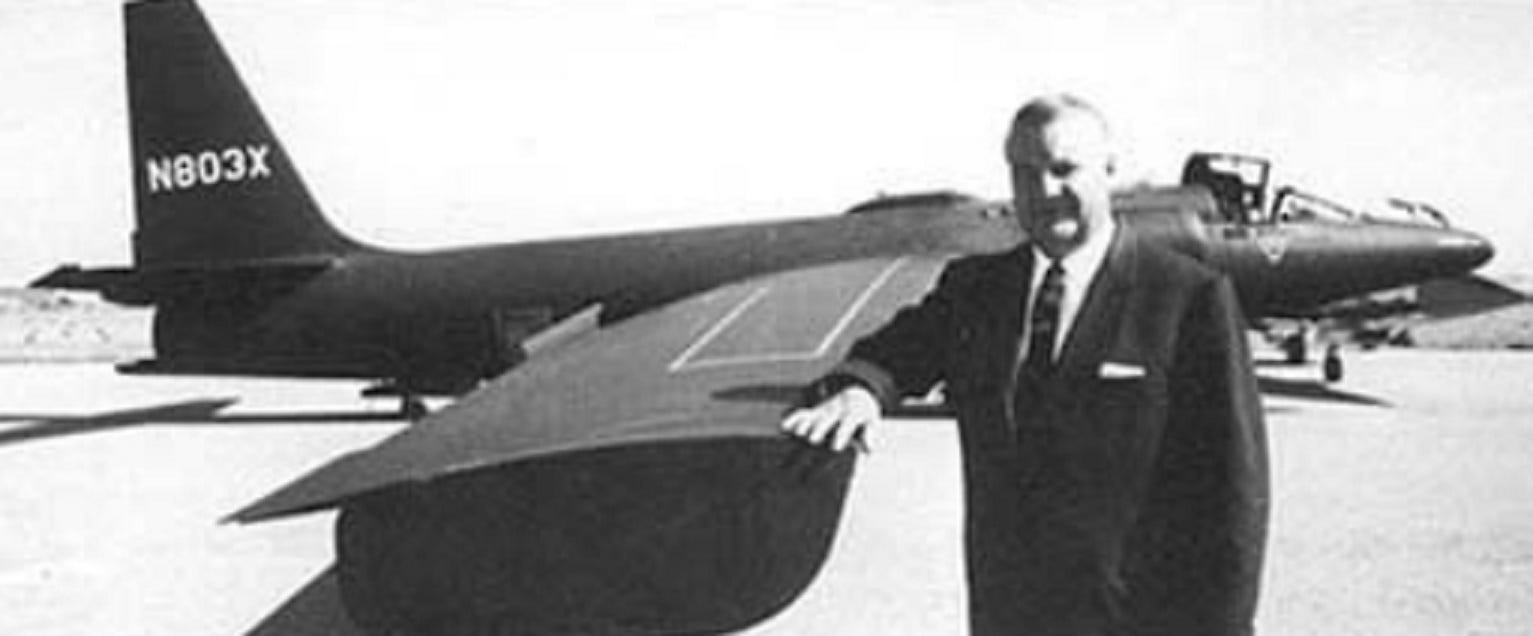
Perched strategically on a hillside facing the vast expanse of the Pacific, their Lindero Ranch in Agoura, California, offered Lockheed Skunk Works chief Clarence L. “Kelly” Johnson and his wife, Althea, a commanding view. It was a location not far from Point Mugu Naval Air Station, a key facility for aircraft and missile testing.
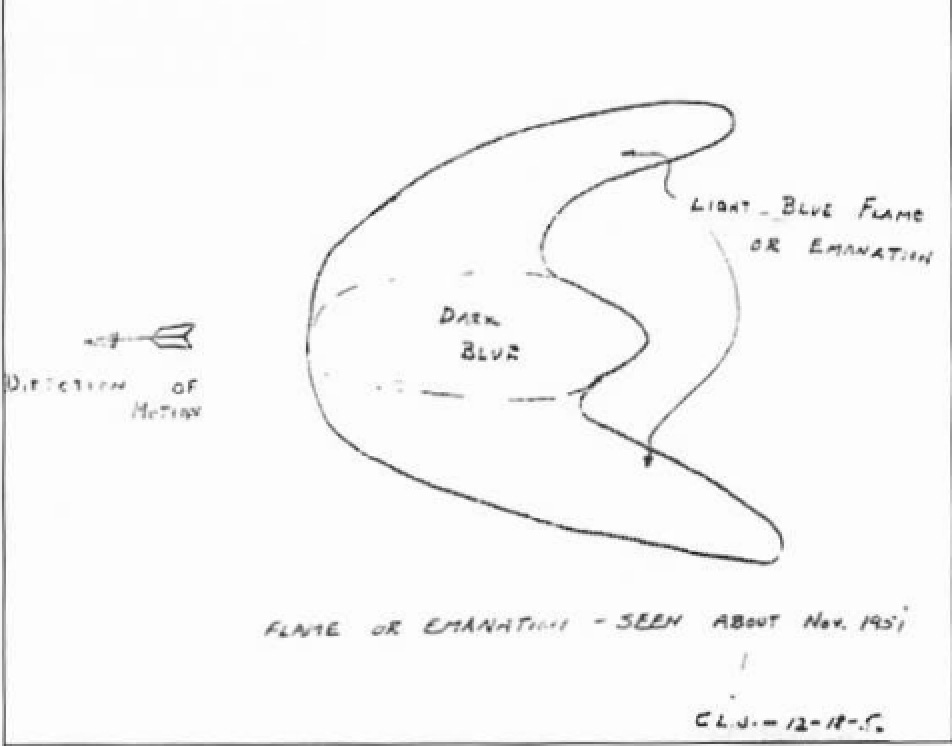
At precisely 4:58 p.m., Johnson, a man renowned for his meticulous observation and engineering brilliance, was looking through a window, admiring the brilliant hues of the sunset that painted the western sky. His attention was snagged by a stark, dark elliptical shape suspended in the sky, seemingly in the direction of Point Mugu Cape.
His first thought, a pragmatic one, was that it might be a lenticular cloud or perhaps a distant smoke trail from an aircraft. However, the object remained stubbornly stationary and utterly unchanged for several minutes, defying any conventional explanation. Sensing something unusual, Johnson called out to Althea to fetch his powerful 8-power binoculars and ran outside into the crisp evening air.
By the time he had the binoculars in hand, the object, which he estimated to be about 170–230 feet wide, had begun to move. It accelerated away from him in a shallow climb, heading in a direction opposite to the natural motion of the cirrus clouds in the sky. Though distant, he perceived it as very large and moving incredibly fast.
While he had no immediate means to accurately gauge its actual size, distance, or speed, the sheer scale and unnatural acceleration left an indelible impression. From their vantage point, the object initially appeared to be hovering to the west at an altitude of approximately 15,000 ±2,000 feet and an estimated distance of 30–60 miles away. The Johnsons watched this impossible ascent unfold for about four minutes.
Meanwhile, high above the churning waves along the Los Angeles coastline, near Long Beach, California, a Lockheed aircraft was on a critical test flight. This was Constellation Airframe 4–101, the prototype for the Navy Airborne Early Warning (AEW) aircraft, the WV-2 Warning Star.
A marvel of Cold War engineering, the WV-2 was a large, four-engine transport aircraft specifically designed for long-standing patrols far off the coasts of North America. Its distinctive silhouette was marked by huge, bulging “blisters” housing advanced radar antennas — a powerful search radar unit in its belly and a height-finder in its dorsal radome.
This formidable aircraft was the vanguard of America’s early warning defense, tasked with providing long-range detection of incoming Soviet bombers. The prototype, 4–101, was the first in a long line of Navy WV-2s and Air Force EC-121s that would form a vital part of the North American air defense network throughout the 1950s and 1960s.
At the controls of this advanced machine was a veritable dream team of aviators and engineers. Rudy Thoren, Chief of Flight Test for Lockheed since 1946 and a highly experienced senior test pilot in the Constellation program (recruited by Johnson himself), was piloting.
Roy Wimmer, another seasoned senior test pilot and technically the pilot in command, had turned the controls over to Thoren for the test phase and was maintaining a watch for other air traffic. Assisting them were Joseph F. Ware Jr., another long-time Lockheed engineering test pilot, company pilot Charlie Grugan, and Lockheed’s chief aerodynamicist, Philip A. Colman (who would later design the wings for the CL-282 recon plane).
