
The Mount Kilimanjaro Case

On the crisp, clear morning of February 19, 1951, under the brilliant glare of the rising East African sun, an extraordinary and meticulously documented encounter unfolded high above the majestic, snow-capped peaks of Mount Kilimanjaro in Tanganyika (modern-day Tanzania).
At precisely 7:20 a.m., Captain Jack Bicknell, a seasoned 50-year-old pilot and ex-B.O.A.C. veteran, along with his Radio Officer, 54-year-old Dennis W. Merrifield, an ex-R.A.F. man, were at the controls of an East African Airways Lockheed Model 18 Lodestar.
The twin-engine aircraft was en route from Nairobi, Kenya, to Mombasa, enjoying “perfect” weather conditions with “good” and “cloudless” visibility. It was Merrifield who first spotted it. Gazing out, he exclaimed to Captain Bicknell, “Have a look at a flying saucer!”
Suspended absolutely motionless, approximately 10,000 feet above Kilimanjaro’s summit, was a dazzling, “bright gleaming spot.” Merrifield immediately radioed Nairobi air traffic control, describing the anomalous object. The response from Nairobi, however, was notably dismissive, reporting no other aircraft in the wide arc and facetiously advising,
“Take more water with it.” Captain Bicknell and Merrifield watched the object for an initial three minutes before alerting their eleven passengers — nine men and two women. For a total of seventeen minutes, the Lodestar’s occupants had an unobstructed view of the inexplicable phenomenon.
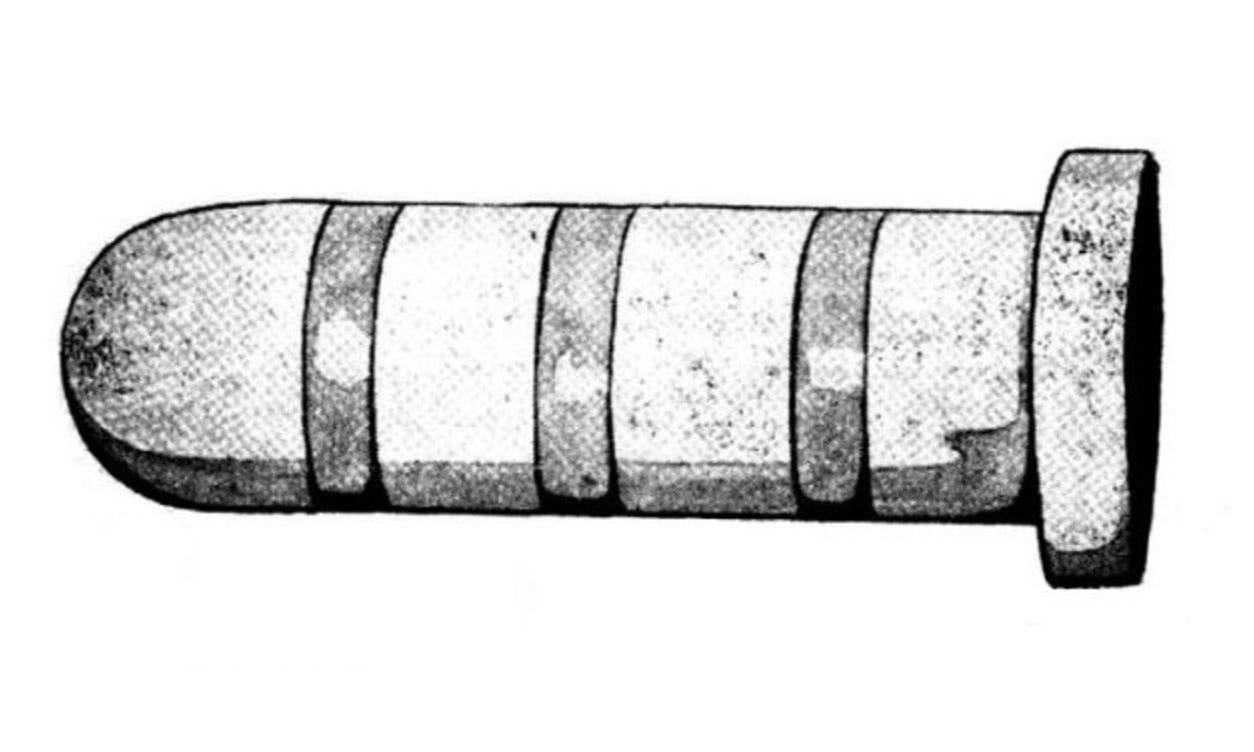
Captain Bicknell, observing through a pair of powerful binoculars, provided a detailed description: a “metallic, bullet-shaped object which must have been over 200 feet long.”
He noted a distinct vertical fin at one end and, at regular intervals along its gleaming fuselage, several vertical dark bands. Its stillness was absolute and perplexing, defying conventional aviation logic. Another passenger, Captain H.B. Fussell, a sports dealer from Newport, Monmouthshire, also utilized his powerful binoculars.
His account corroborated Bicknell’s, describing the object as “bullet-shaped” and “whitish-silver,” adorned with “three vertical black bands down the side.” Fussell detailed its initial stationary phase, which he observed for about ten minutes, followed by a sudden, vertical ascent of 5,000 feet.
It then became stationary once more for a brief period before commencing lateral movement towards the east at “great speed,” which he estimated at “probably 400 m.p.h.” Further captivating observations came from Radio Officer Roy Overstreet, a passenger from the American freighter Robin Mowbray, who, peering through binoculars, believed he could discern “a row of circular windows” along its immense form.
Charles J. Vernon, the purser of the Robin Mowbray and also an American, was struck by its sheer scale, estimating it “must have been immense, two or three times the size of the largest passenger plane.” After what Captain Bicknell meticulously timed as seventeen minutes of complete immobility, the astounding object abruptly began to move.
